Page 4 · The desert redoubt
The Desert Redoubt
Ballarat, California
Across an alkaline lake bed, a tiny speck glints in the sun—an invitation to freewheeling history and the blank vastness beyond.
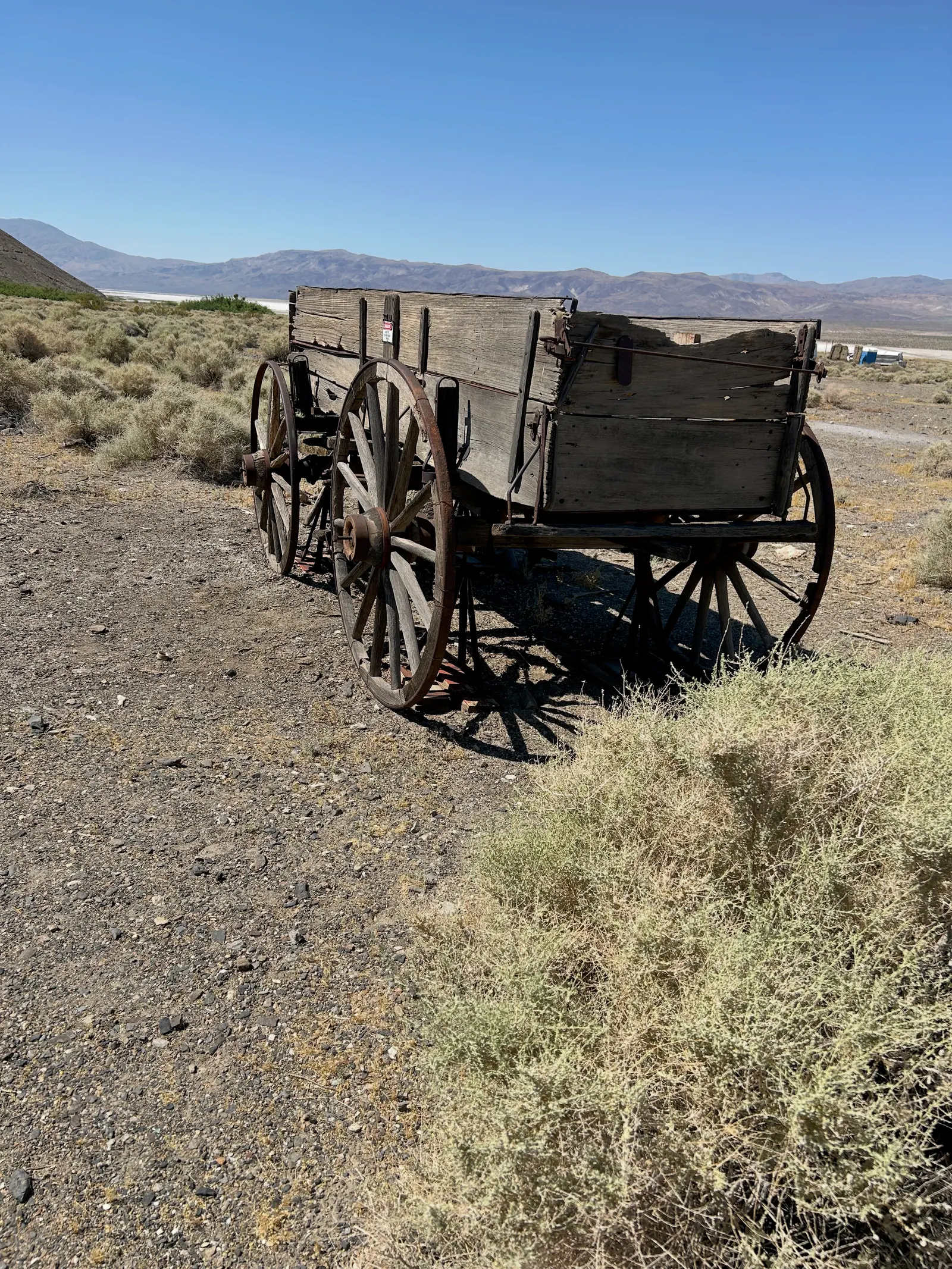
Far ahead of the bumpy ride on a washboard road, across an alkaline lake bed, a tiny speck glints in the sun like a magnet. Set in inaccessible desert mountains, it has drawn wayward minds from gold-era robbers to Charles Manson to Ballarat Bandit George Robert Johnston and still invites social fugitives with its freewheeling history and blank vastness.
Simply walk in the front door of the tiny speck in the distance. Reach in your wallet, put a few bills in a tiny can and grab a soda. Most likely, no one will bother you. No one will be there.
When Ballarat ceased its conventional existence in 1917 as a supply point for surrounding towns, the objects that comprised a typical mining town began to gather inside the tiny speck. They stare plainly, nothing to hide—an ancient typewriter, a bison head mounted facing the lake bed.
Take a drink. Take a seat under the tin-roofed porch. Welcome to California. Take some rocks.
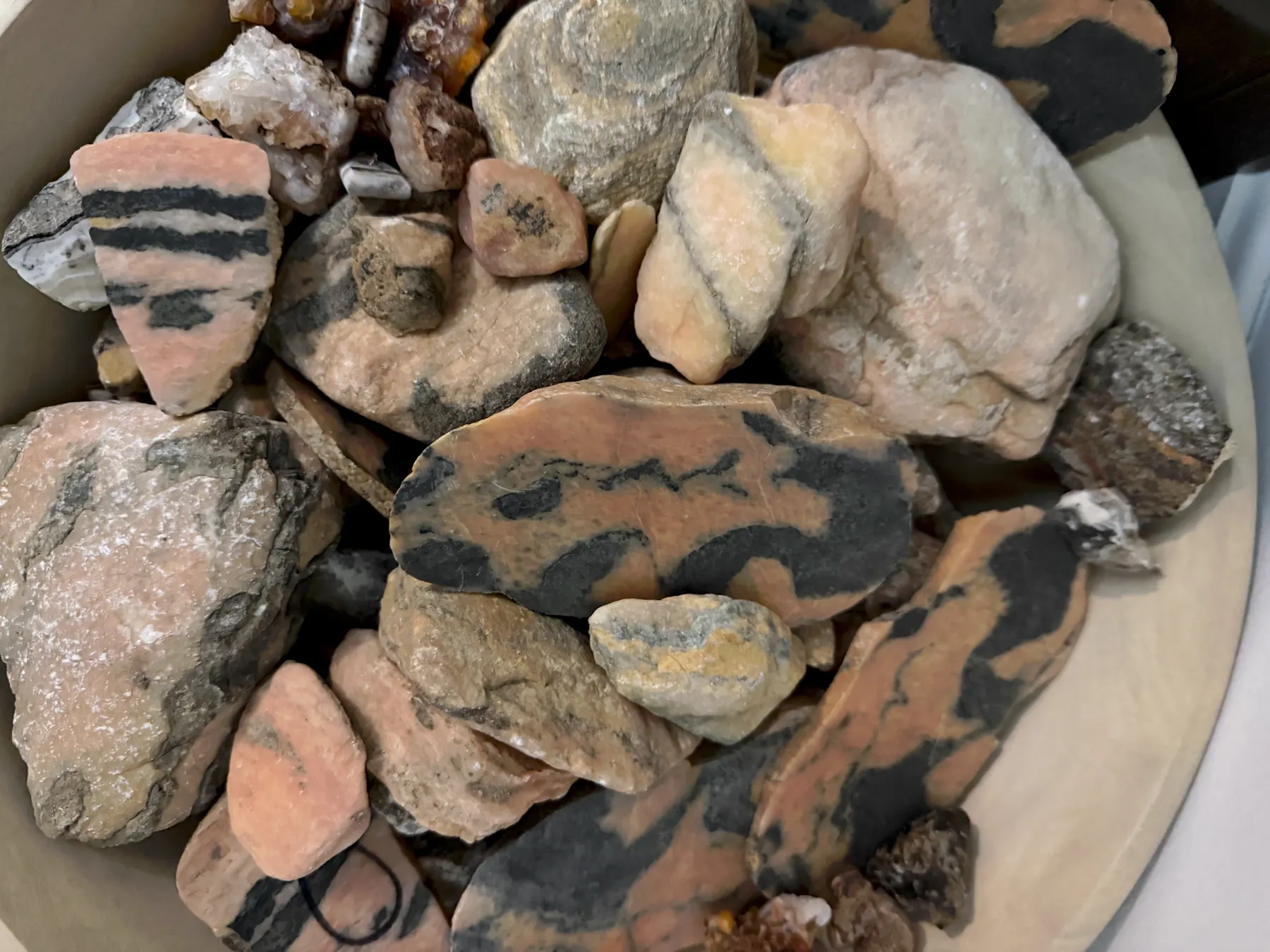
A vast rock field built by destructive monsoon rains defines Ballarat topography. It contains stones by the million, a few of them the golden and pink Ballarat marble, or California Stone.
The stone formed when the heat and stress of mountain emergence and earthquakes converted limestone into marble and infused it with the hues of host minerals. The golden ones look like Mojave sunrises, the pink ones like Mojave sunsets, plain and basic as day and night.
Take California: Walking Through Change. I laid it on top of the old wood counter.